
Norway Rats (Rattus Norvegicus)
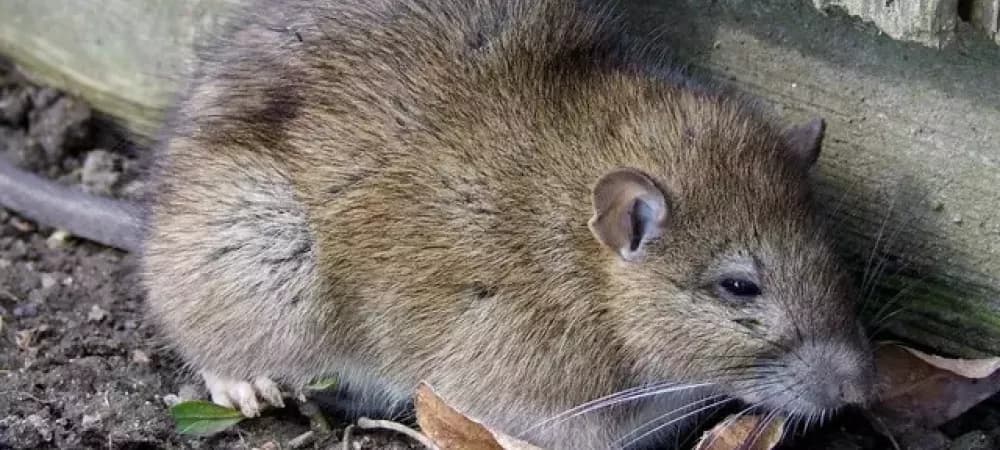
The Norway rat is also known as the Brown rat, Gray rat, Sewer rat, Barn rat, Wharf rat, and Water rat. The Norway rat is a native of Central Asia.
The Norway rat is also known as the Brown rat, Gray rat, Sewer rat, Barn rat, Wharf rat, and Water rat. The Norway rat is a native of Central Asia. The Norway rat is the largest of the commensal (meaning "sharing one's table") rodents and is sometimes called a Super Rat or King Rat.
Description and Characteristics
- Large and robust
- Weighs 7 to 18 oz.
- Has a blunt muzzle with small eyes and ears
- Has poor eyesight but its other senses, including smell, taste, touch, and hearing, are well developed
- Scaly tail is shorter than its body
- Averages 16 inches in length (head and tail)
- Color is gray, grayish-brown, blackish, or reddish-brown
- Fecal droppings are about ¾ inch (blunt ends) and can be as many as 25,000 per year.
Habits
Norway rats are very adaptive to a variety of environments. Like other rodents they live in colonies with an alpha male and prefer to nest in underground burrows although they will live in crawlspaces, basements, and sewers as well. Norway rats are excellent climbers and swimmers.
Norway rats can get into a home or business through a hole the size of a quarter or even a ½ inch gap. They can gnaw (chew) through most structures. Don't assume there is no way in.
Norway rats can long jump approximately 3 feet (with a running start) and jump straight up approximately 2 feet from a standing position. They can fall 50 feet and survive.
Contrary to popular belief, rats are not truly nocturnal. Rats are more active when there is less danger, which is usually at night. Peak activity is shortly after dark and again prior to sunrise. They prefer to travel along walls and between objects in order to protect themselves from predators. A rat travels the same pathways hundreds of times in the course of a week. In time rodents memorize these runways though muscle movements called kinesthesia. When frightened, this ability allows them to race back to their nest at high speeds.
Diet
Norway rats are omnivorous and eat grains, nuts, seeds, fruits, insects, snails, meats, and pet food. They will eat approximately 0.5 to 1 oz. of food and need 1 to 2 oz. of water per day.
Reproduction
- Life span is 6 months to 1.5 years.
- Females can reach sexual maturity in 2 to 3 months.
- After mating, the baby pups will be born in 21 to 23 days.
- The average litter size is 6 to 12 pups.
- The average number of litters in a year is 3 to 6 but it could be higher.
- A single mating pair could produce around 1,800 rodents in one year.
Pest Control
Fighting off a rodent infestation takes a professional in most cases. Due to the rapid increase in a rodent population, a rodent problem needs to be taken seriously. Rodents can enter a home through very small areas and can breed, hide, and multiply better than most mammals. Look for droppings in garages, attics, basements, and under appliances.
If rodent activity is found, you might try a store-bought rodent poison. However, chances are a professional will be needed to solve a difficult rodent problem. Rodents carry disease and other parasites, causing serious health risks to people and their pets.
Prevent a rodent infestation before it becomes a problem for your family. Barrier specializes in comprehensive rodent control. Call today!
Learn more about our rodent trapping services and rodent proofing and exclusion to protect your home.
Need Professional Pest Control?
If you're dealing with a pest problem in the Sacramento area, our family-owned team is here to help. Get a free quote today!
Norway Rats Burrowing Under Your Foundation?
Norway rats are powerful burrowers that nest in crawl spaces, basements, and along foundations. They can gnaw through most building materials and a single pair can produce over 1,800 offspring in a year. Our comprehensive rodent service combines trapping with exclusion and proofing to stop the problem at its source.